HEPA Vacuum Attic Insulation Removal in Oklahoma City
When rodents, raccoons or a roof leak have ruined the insulation in your attic, blowing more on top only buries the problem. We pull it out with a HEPA-filtered vacuum, clean the attic floor, find the cause, and leave the ceiling ready for air sealing and new insulation.
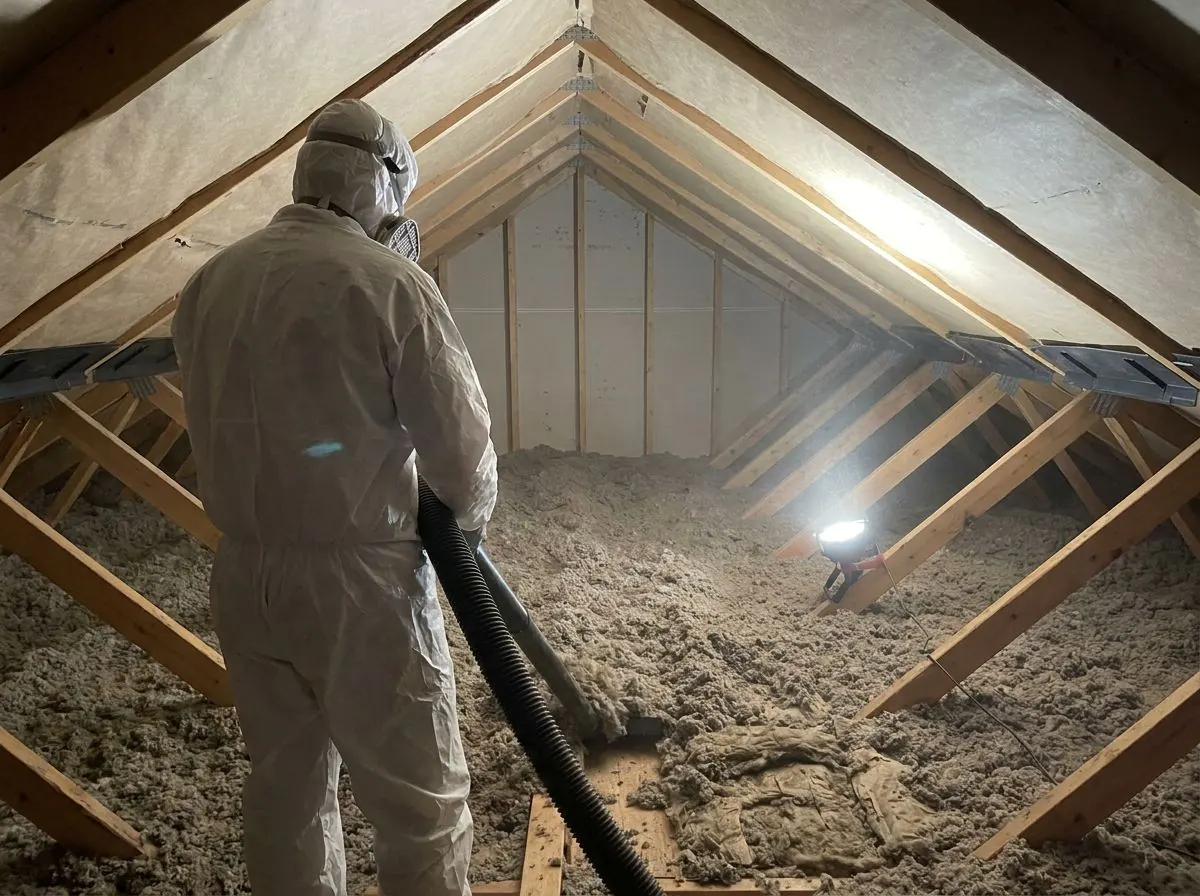
The Problem It Solves
Attic insulation in Oklahoma City rarely wears out on its own. It fails when something gets into it. Roof rats, mice and squirrels tunnel through loose-fill and nest against the ceiling drywall, and a raccoon that finds a loose soffit panel or a gap at a roof vent can flatten and soil a whole section of attic in one season. Topping that up with fresh fiberglass seals the contamination in, keeps the odor in the house, and gives the animals a softer bed.
Water is the second trigger. Spring hail and high wind are routine in central Oklahoma, and the roof leaks that follow a damaged shingle, a lifted flashing or a cracked pipe boot often drip for weeks before a ceiling stain gives them away. Cellulose soaks the water up and packs into a matted crust that has lost most of its loft, and the drywall beneath can grow mold. Smoke from a house or kitchen fire leaves soot and a smell the insulation holds long after the cleanup indoors is done.
There is also a practical reason to strip an attic. The ceiling plane is where the air leaks are, and in most OKC homes it is also where the furnace, air handler and duct trunk sit. Under a foot of dirty, compacted loose-fill, nobody can find the gaps around stacks, wiring, fixtures and duct boots, let alone seal them. Rodent waste adds a health concern: deer mice and other rodents can carry hantavirus, and dried droppings disturbed without precautions can put particles in the air.
How It Works
HEPA vacuum removal moves the old insulation through a large-diameter hose to a collection unit on a truck or trailer at the curb. Where the framing allows, the hose comes in from outside through a gable vent or roof opening and never enters the living space; otherwise it runs to the attic access along a covered route, with the access sealed around it. The exhaust passes through HEPA filtration, so fine dust is captured rather than blown across the yard.
The empty attic is where the real diagnosis happens. Water stains on the roof deck show where a leak entered, chewed wiring and torn duct wrap show where the animals traveled, and daylight at the soffits shows how they got in. We photograph what we find and tell you which items belong to a roofer, an electrician, an HVAC contractor or wildlife control, because removal fixes nothing while the cause remains. Once it is dealt with, the ceiling is air sealed, baffles go in at the eaves, and new insulation is blown to a measured depth.
How the Job Runs, Step by Step
Inspect and identify the material
We look at what is in the attic, how deep, how far the contamination runs and why. If we see vermiculite, the grey-brown or gold pebbles found in some older homes, sometimes under a newer layer, we stop. We do not vacuum it, and we refer you for testing and licensed abatement.
Plan the hose route and protect the house
The vacuum unit parks outside. Where a gable or the roof allows, the hose enters from outside; otherwise the indoor route is covered. The access is sealed with plastic around the hose, and the crew suits up in Tyvek and respirators before climbing in.
Dampen, extract and bag
Nests, raccoon latrine areas and droppings are dampened first. Insulation is drawn through the HEPA-filtered vacuum from the far end of the attic back toward the access, working around the air handler and duct runs without crushing them. Waste is bagged at the unit and hauled away.
Clean, inspect and photograph
The attic floor is cleaned by hand and HEPA vacuum at the eaves, truss bays and wall tops. We photograph deck staining, entry holes, damaged wiring, torn duct wrap and bath fans that end in the attic, and flag each item for the trade that should fix it.
Seal, baffle and re-insulate
With the causes fixed, stacks, wiring holes, fixtures, duct boots and the hatch are air sealed. Baffles and wind dams go in at the eaves, and new fiberglass or cellulose is blown to the depth the bag chart gives for the target, with depth markers left in place.
What Decides the Specification
What comes out, and how, depends first on the material. Loose-fill fiberglass, cellulose and rock wool vacuum cleanly. Batts usually come out by hand, because an insulation vacuum chokes on them. Cellulose a leak has soaked is heavy and slow and sometimes has to be broken up before it will travel. Vermiculite is outside our scope entirely. Much of the vermiculite sold in the US came from a mine near Libby, Montana, and it may contain asbestos, so the EPA advises leaving it undisturbed and having trained professionals handle it.
The attic sets the rest. Low-slope hip roofs with tight eaves, the truss webbing in most post-1960s metro homes, and an air handler sitting mid-attic all limit where the hose can go. Not every job needs a full strip. If contamination is confined to one corner and the rest of the attic is clean and dry, partial removal is a reasonable scope, and we will tell you when the sound material is worth keeping.
Oklahoma Code Notes
Removing old insulation is repair work, and whether a permit is involved is for the city building department to decide: the City of Oklahoma City inside its limits, or Edmond, Moore, Choctaw and the other cities in theirs. For the re-insulation, the 2024 IRC as adopted in Oklahoma, with state amendments, gives R-49 for new ceilings with an attic in climate zone 3, the sensible benchmark for an existing attic rather than a legal duty. Vented attics follow the IRC’s 1/150 net free vent area rule, or 1/300 when intake and exhaust are balanced, so baffles keep soffit airflow clear. The FTC’s R-value Rule requires the installer to state R-value, thickness and coverage on your receipt.
General guidance only. The city building department and the product’s own evaluation report decide what applies to your job.
Around Oklahoma City
Removal usually follows one of two things. The first is a roof leak: in Moore and Edmond, spring hail and wind send plenty of homeowners into roof replacements, and the leaks before the new shingles have often soaked the cellulose around a valley, vent stack or skylight, right beside the furnace and duct trunk. The second is animals. Out in Choctaw, where acreages, horse properties and barns sit beside newer subdivisions, mice, roof rats, squirrels and raccoons have far more cover than on a city lot, and attics see more traffic as a result.
Often Done Alongside
Attic Air Sealing & Penetration Proofing
Hand-sealing attic penetrations, top plates, duct boots and the HVAC platform.
Blown-In Cellulose Attic Top-Ups
Borate-treated cellulose blown over thin attic fill toward an R-49 benchmark.
Thermal Imaging & Draft Audits
Before-and-after infrared scans that show missing insulation and air leaks.
Where We Do This Work
Insulation Removal: Questions We Get
What does vermiculite look like, and what should I do if I find it?
Can we stay home while the attic is being vacuumed out?
My roof was just replaced after hail. Does the attic insulation need to come out too?
Where does the removed insulation go?
Can you insulate an Oklahoma attic in the middle of summer or winter?
Considering Insulation Removal?
Tell Spray Tech Insulation about the job. We will look at it, tell you whether insulation removal is the right fix, and price it in writing.