Attic Insulation & Blown-In Loose-Fill Services for Oklahoma City Homes
Blown insulation is how most Oklahoma City homes add R-value without opening a wall or ceiling: cellulose or fiberglass over the attic floor, dense-pack inside closed walls, and the soffit baffles that keep a deep attic ventilated. Attic height, the ceiling, your walls and the ducts overhead decide which fits, so we start by looking.
How These Systems Differ
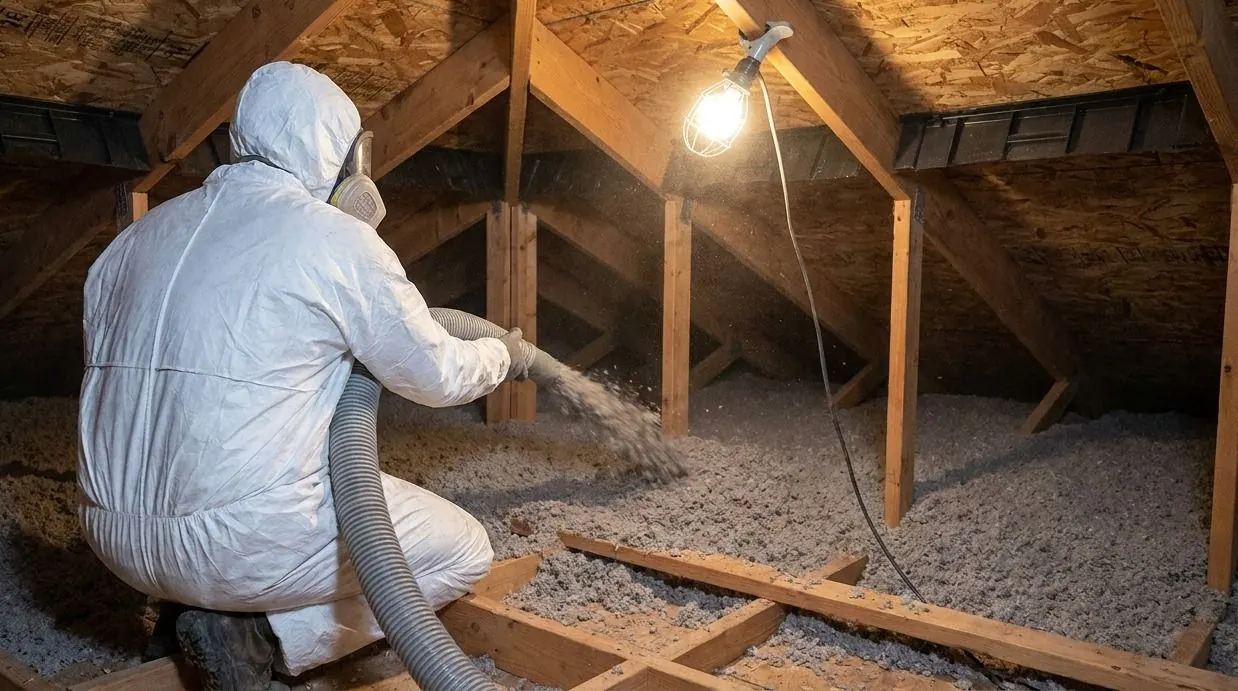
Loose-fill insulation is blown from a machine through a hose, so it settles around trusses, wiring, duct runs and odd framing in ways batts cannot. In an attic it builds one continuous blanket over the ceiling, usually right over what is already there. The yardstick is the 2024 IRC as adopted in Oklahoma, which sets R-49 for new ceilings with an attic in climate zone 3. That is a new-construction figure rather than a retrofit obligation, but for an existing attic it is the right target, and many older metro attics sit well short of it.
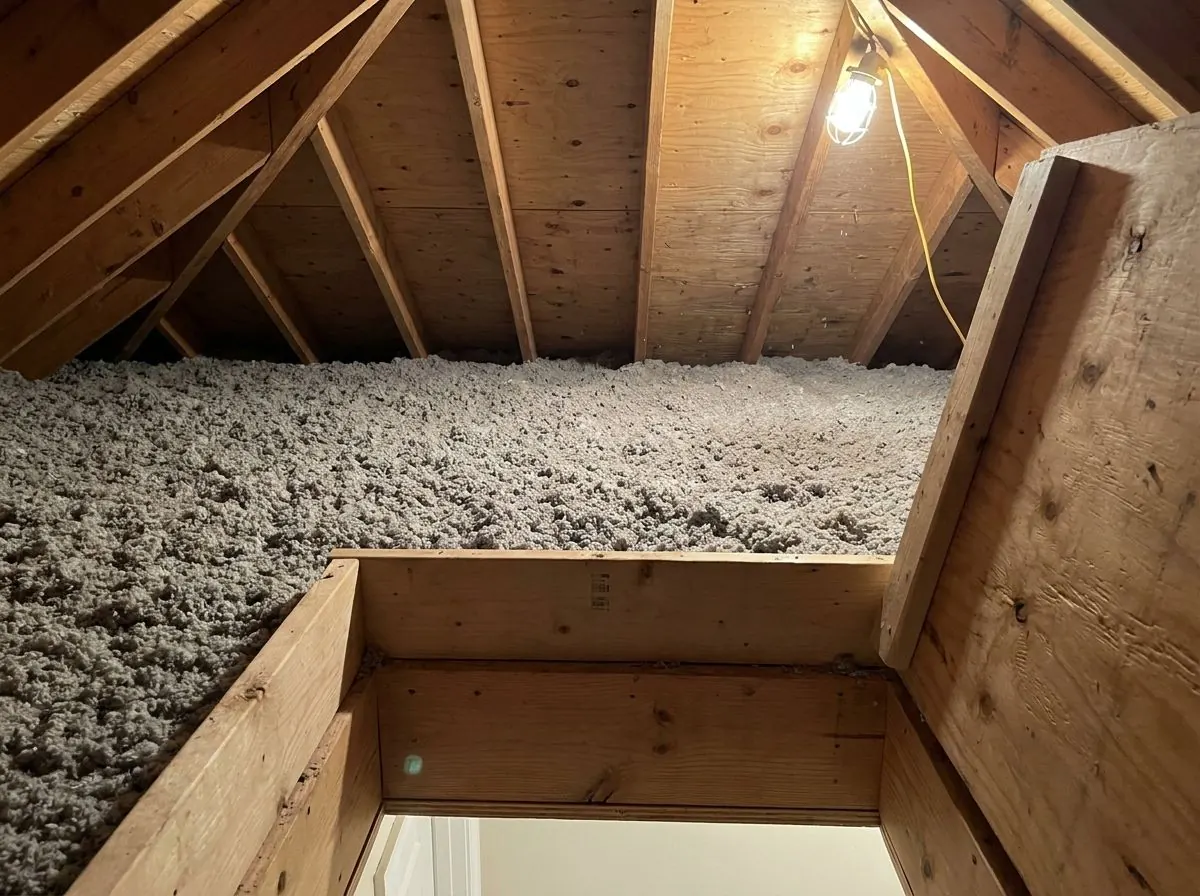
The two attic fills differ in useful ways. Cellulose, borate-treated recycled paper fiber, commonly delivers about R-3.2 to R-3.8 per inch and reaches R-49 in roughly 13 to 15 settled inches. It resists air drifting through it, but it is heavier and it settles, so it is blown with an allowance. Loose-fill fiberglass commonly delivers about R-2.2 to R-2.9 per inch, so R-49 often takes 18 to 22 inches, but it is light, settles minimally and does not absorb water. It leans harder on wind dams at the eaves, which matters in a state this windy.
Dense-pack and baffles round out the category. Dense-pack uses the same fiber at much higher density, commonly about 3.5 lb/ft³ for cellulose, injected into the closed wall cavities of older homes that are empty or half filled. Baffles and wind dams are not insulation at all. They are the prep that keeps a deep attic venting from soffit to ridge and stops wind from scouring fill back from the outside walls. Most good attic jobs include them, and a top-up without them often ends up choking its own ventilation.
Attic & Blown-In Services
Blown-In Cellulose Attic Top-Ups
Borate-treated cellulose blown over thin attic fill toward an R-49 benchmark.
How it works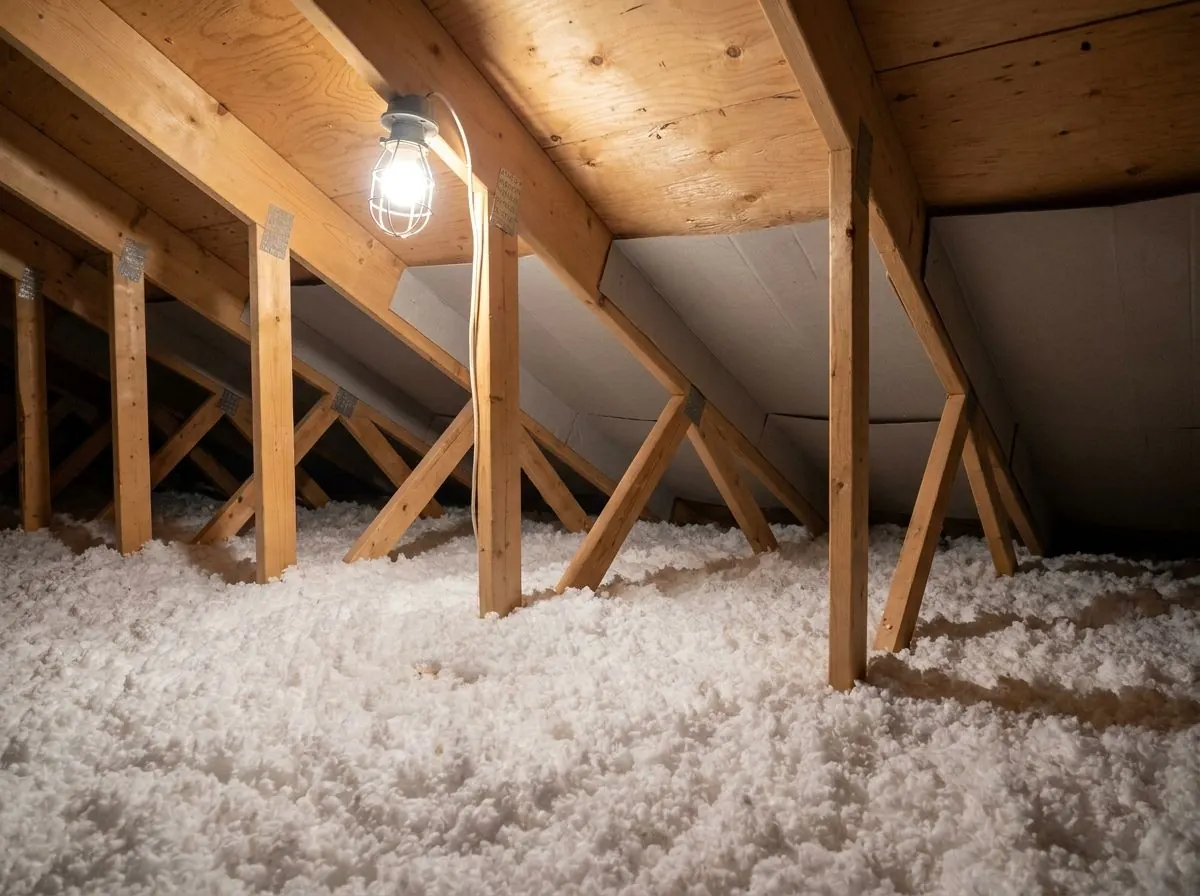
Blown-In Loose-Fill Fiberglass
Light, non-settling loose-fill fiberglass, with wind dams to protect the eaves.
How it works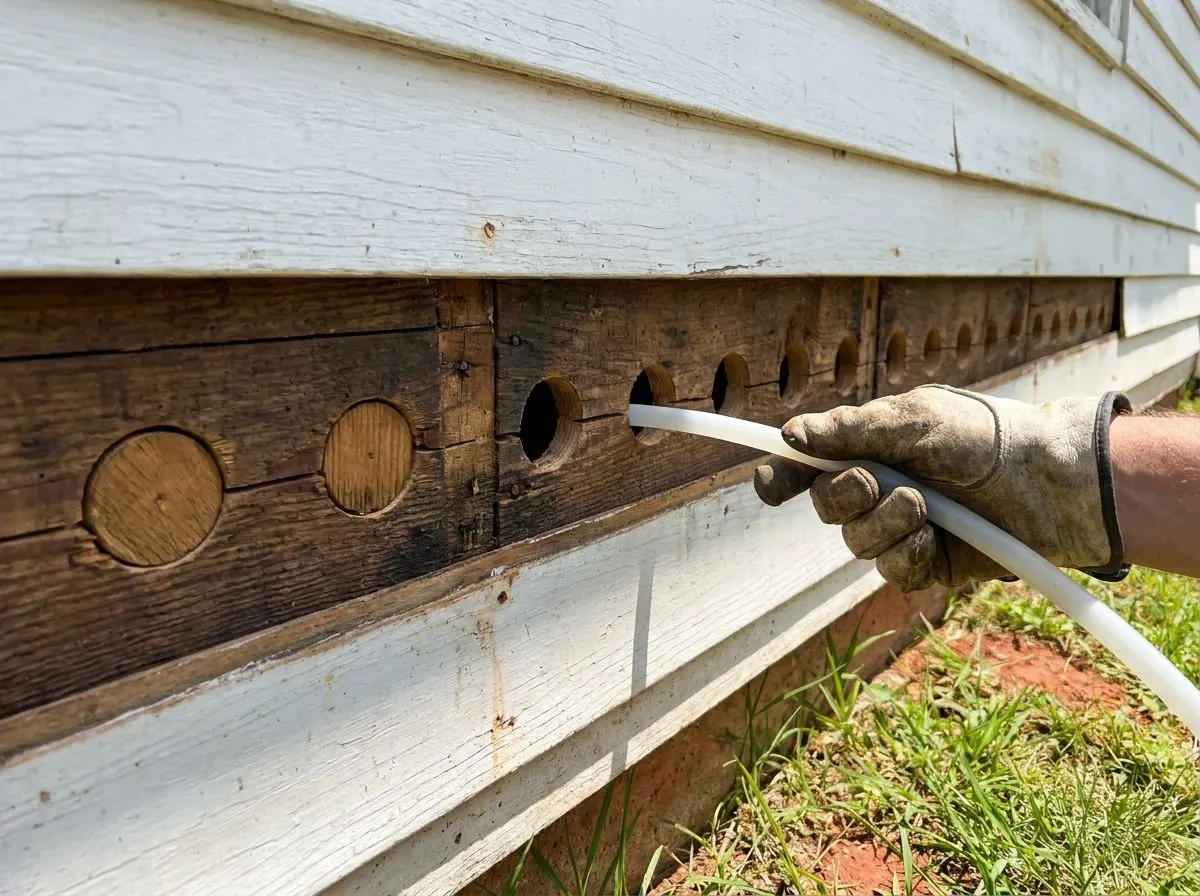
Dense-Pack Cavity Injection
High-density cellulose injected into closed walls through small drilled holes.
How it works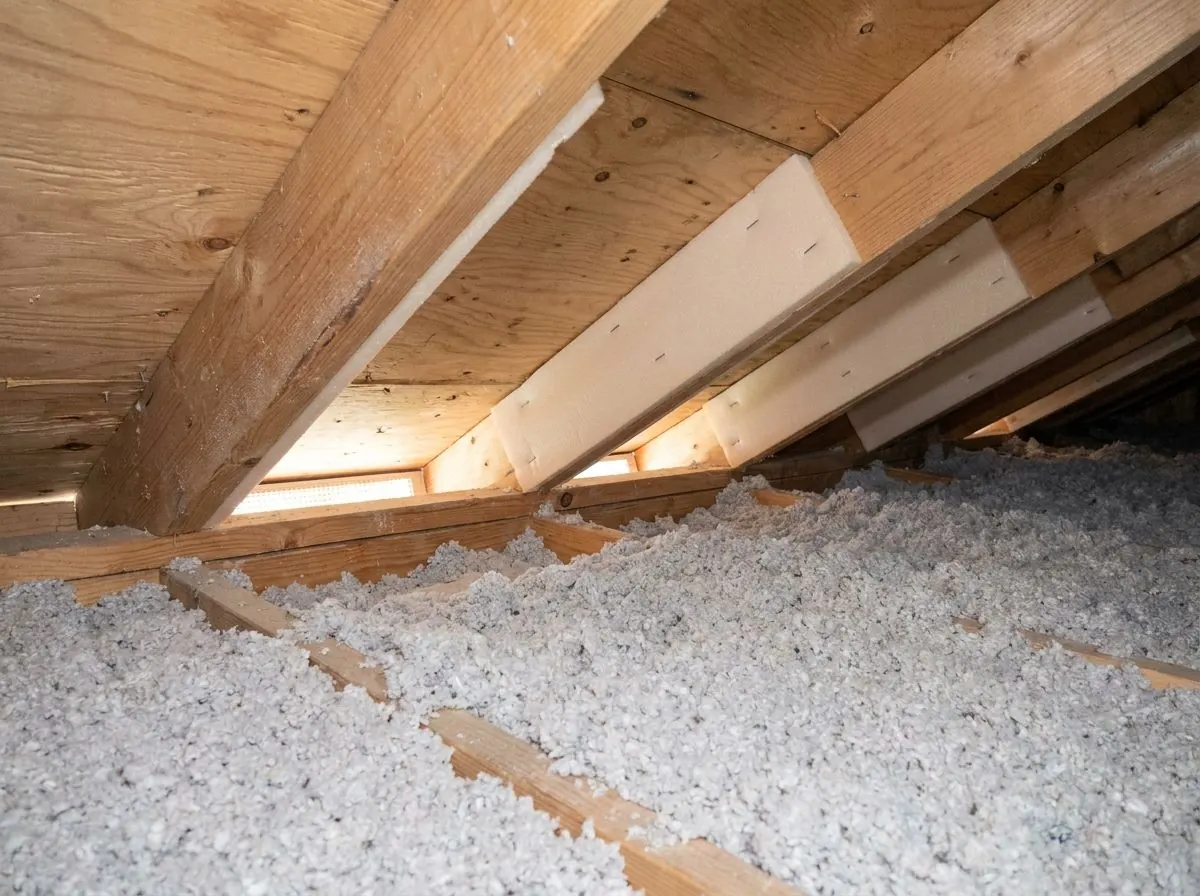
Attic Venting & Baffle Prep
Rafter vents and wind dams that keep soffit-to-ridge airflow open.
How it worksChoosing Between Them
- Room to spare, sound ceiling
- Cellulose usually reaches R-49 in the fewest inches, and its dense layer slows air drifting through at the eaves. It suits roomy attics over drywall that is flat and firmly fastened.
- A ceiling that should stay light
- Where the drywall sags, the framing is widely spaced or the attic has a past leak, loose fiberglass adds far less weight and holds no water, provided there is height for the deeper layer.
- Hot walls, adequate attic
- If the attic already measures close to R-49 but a summer scan shows empty or slumped wall bays, dense-pack treats the wall directly instead of piling more on the ceiling.
- Packed eaves or dead soffits
- Start with baffles, wind dams and the soffit intake. Adding fill to an attic whose low vents are already blocked or missing deepens the problem instead of fixing it.
Attic & Blown-In: Common Questions
How can I tell how much insulation is in my attic right now?
In what order should attic work be done?
Is attic insulation still worth it when my ducts and air handler are up there?
Other Insulation Services
Talk to Us About Attic & Blown-In
Tell us what the space is and what is going wrong. We will recommend the system that fits, including when a cheaper one will do.